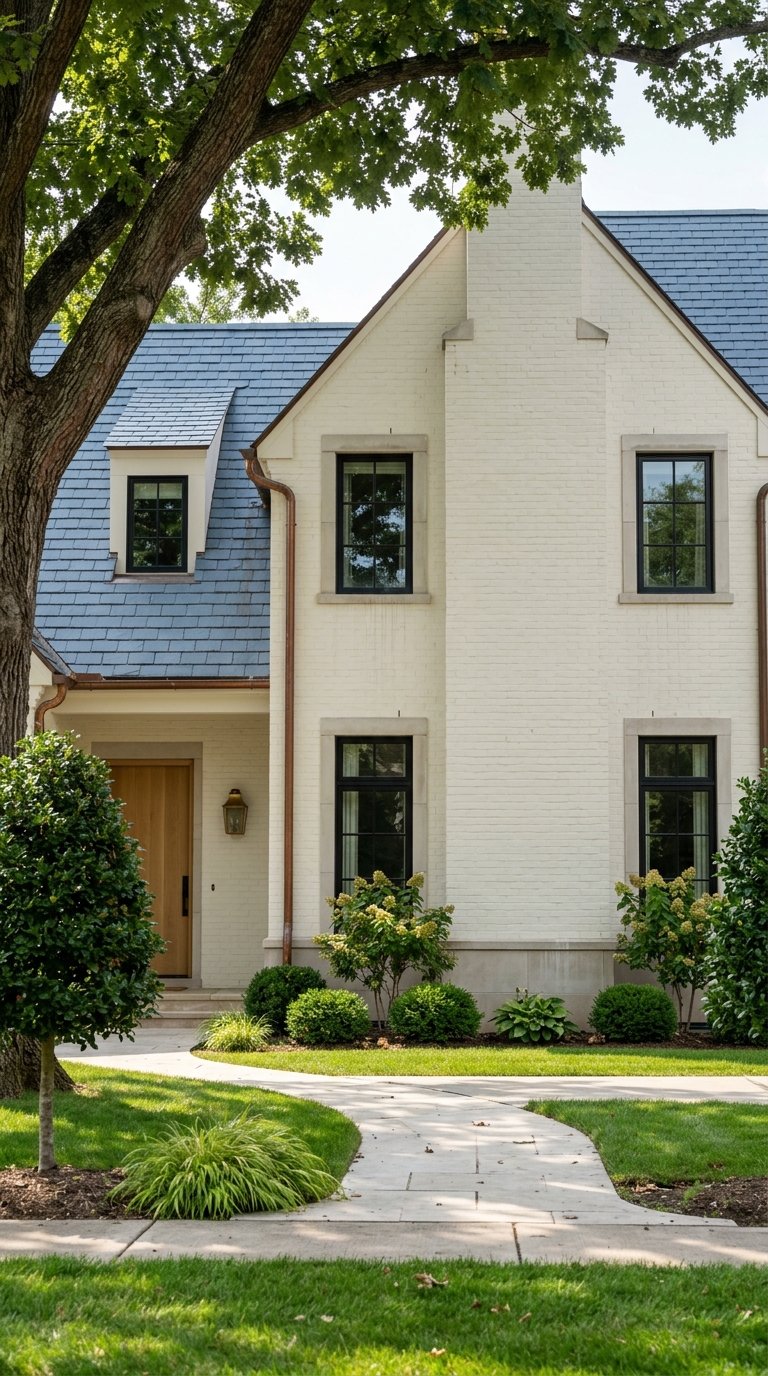
Architectural Styles In Mockingbird Valley And Indian Hills
April 2, 2026
April 2, 2026
If you are drawn to homes with real presence, Mockingbird Valley and Indian Hills stand out for a reason. These east Louisville enclaves are not defined by one uniform look or a cookie-cutter subdivision pattern. Instead, you see architecture shaped by rolling land, long drives, mature trees, and estate-style siting. If you are buying, selling, or updating a home here, understanding that design language can help you spot what gives these properties lasting appeal. Let’s dive in.
Mockingbird Valley and Indian Hills share an important trait: the landscape is part of the architecture. According to Louisville’s adopted neighborhood plan, Mockingbird Valley is known for its rural single-family setting, narrow winding roads, large setbacks, rolling lawns, native stone, and mature tree canopy. The same plan notes that about one-third of residences are served by private roads and supports preserving Mockingbird Valley Road as a scenic two-lane road without curbs, gutters, or sidewalks. You can read that directly in the Mockingbird Valley neighborhood plan.
Indian Hills has a similar relationship to the land, but with a different planning origin. The City of Indian Hills history says the Olmsted firm designed the 1924 subdivision with curving streets, rounded intersections, preserved trees, and open green space that followed the natural contours of the property. That design approach still shapes how homes are experienced from the street today.
In both areas, the setting does a lot of visual work. The road approach, setbacks, stonework, and canopy are not just background details. They are central to the character people notice first.
Mockingbird Valley is best understood as an estate district with a mix of notable period styles rather than one dominant neighborhood-wide look. The area combines formal architecture with preserved natural features like bluffs, creek beds, stone outcroppings, and mature trees. That blend gives the neighborhood a refined but still landscape-driven identity.
A strong example comes from the National Register documentation for the Duncan Estate, which describes a two-and-a-half-story home with Dutch Colonial Revival details and Colonial Revival detailing on its formal facade. Just as important, the nomination highlights the estate’s barn, carriage house, garage, and formal garden as contributing parts of the property. That tells you something important about Mockingbird Valley: the architecture often extends beyond the main house.
Another standout property, the same National Register source notes, is the Carrie Gaulbert Cox and Attilla Cox, Jr. House at 349 Mockingbird Valley Road, completed in 1906 in the Italian Renaissance style. So while Colonial-inspired homes are part of the story, they are not the whole story.
In practical terms, Mockingbird Valley often reflects a mix of:
These styles tend to appear in homes with formal massing, substantial scale, and carefully planned approaches. You may also notice materials and features that repeat across different homes, even when the styles vary.
The details that feel most authentic here include:
The neighborhood’s broader historic significance supports that reading. A Kentucky transportation document discussing the district notes that Mockingbird Valley was listed on the National Register of Historic Places in 2007 and recorded with 179 contributing elements, reinforcing the importance of the full setting, site planning, and built environment together. See the district documentation here.
Indian Hills has a related but somewhat more consistent visual identity. It developed as a traditional estate suburb, and its planning history helps explain why. The city history says the original Indian Hill Farm included a late Georgian plantation house that was later enlarged in the Victorian era, and the 1920s subdivision design preserved the land’s natural contours, tree cover, and open space.
That planning framework supports architecture that feels established, orderly, and tied to the landscape. Rather than a rigid street grid, you get curving roads and homes that sit comfortably within larger lots. This creates a visual rhythm that favors proportion, symmetry, and traditional materials.
One of the clearest style anchors is Midland. The National Register listing for Midland describes it as an early-20th-century country house in Georgian Revival style on a six-acre site with a rural ambience. That description is useful because it shows how Indian Hills developed around substantial homes in a landscaped setting.
Indian Hills is most strongly associated with:
The overall look tends to be slightly more uniform than Mockingbird Valley, even though individual homes may vary in age and updates. If Mockingbird Valley feels like a collection of estate properties in a preserved natural setting, Indian Hills often reads as a traditional planned suburb with estate-scale homes.
When you walk or drive through Indian Hills, the most recognizable cues often include:
The easiest way to compare these neighborhoods is this: Mockingbird Valley feels more like a historic country-estate district, while Indian Hills feels more like a traditional estate suburb shaped by thoughtful early planning.
Mockingbird Valley shows a broader mix of period styles and dramatic site conditions, including bluffs, creek beds, and stone outcroppings. Indian Hills leans more heavily into Colonial Revival and Georgian Revival influences, supported by curving streets and a more cohesive subdivision plan.
Both places value privacy, landscape, and architectural presence. The difference is in how that character developed.
If you are buying in either neighborhood, it helps to look beyond square footage and finishes. In areas like these, the lot, siting, approach, and preserved exterior details can shape the home’s overall appeal just as much as the interior.
If you are selling, those same features deserve attention in your marketing strategy. Buyers interested in Mockingbird Valley and Indian Hills are often responding to authenticity, setting, and architectural character. A strong presentation should highlight not just the home, but also its relationship to the landscape.
For owners considering updates, compatibility matters. Louisville’s Standard Design Guidelines say character-defining features should be preserved, additions should respect the original style and scale, and new work should be compatible in massing, roof form, window proportions, and materials. The city also notes that exterior work on a local preservation-district property or individual landmark requires a Certificate of Appropriateness.
In real terms, that means thoughtful updates usually make more sense than visually dominant changes. In neighborhoods where setting and proportion matter so much, preserving the home’s relationship to the site can be just as important as preserving the front facade.
If you want updates to feel at home in Mockingbird Valley or Indian Hills, pay special attention to:
The strongest renovation results usually keep additions subordinate to the original structure. That helps the property maintain the balance between house and landscape that defines these areas.
Homes in Mockingbird Valley and Indian Hills are not just about style labels. Their appeal often comes from how architecture, land, and site planning work together. When original proportions, traditional details, and landscape features stay intact, the home tends to feel more cohesive and distinctive.
That matters whether you are preparing a property for market or deciding where to buy. In neighborhoods with this much visual identity, authenticity can make a strong impression. Buyers are often responding to the complete experience, from the road approach to the facade to the surrounding canopy.
If you are thinking about buying or selling in Mockingbird Valley or Indian Hills, working with a team that understands how neighborhood character affects presentation and buyer interest can make a real difference. The Sokolers bring deep Louisville market knowledge, modern marketing, and neighborhood-level insight to help you move with confidence.
When you work with The Sokolers, you’ll immediately understand why clients think of Greg and Casey as dedicated specialists who have mastered the skills needed for evaluating, marketing, and matching buyers and sellers.
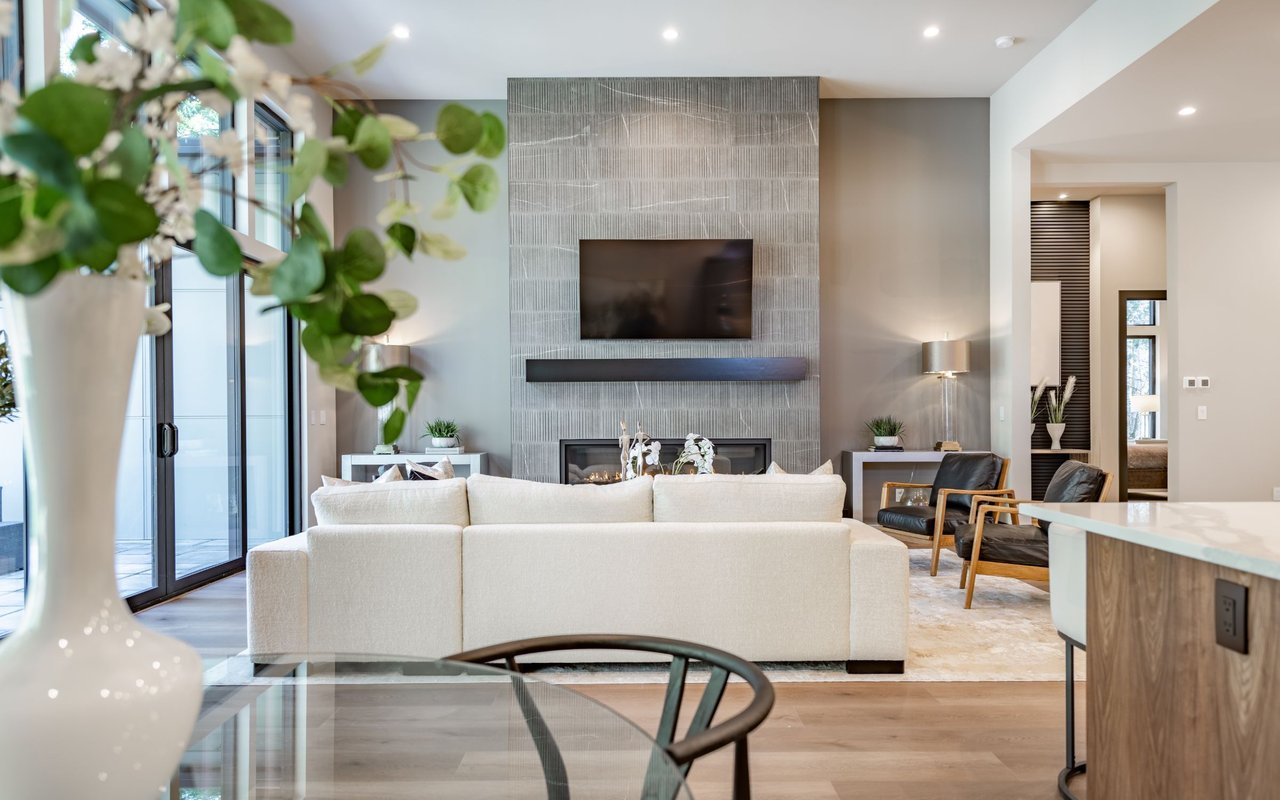
10525 TIMBERWOOD CIR LOUISVILLE KY 40223